How to Coordinate Motifs in a Wholesale Space Party Range
- Share
- publisher
- GleeParty Editorial Team
- Issue Time
- Oct 28,2026
Summary
Plan a space party range with a clear focal motif, coordinated artwork and an accurate component record for B2B sourcing.
How to Coordinate Motifs in a Wholesale Space Party Range

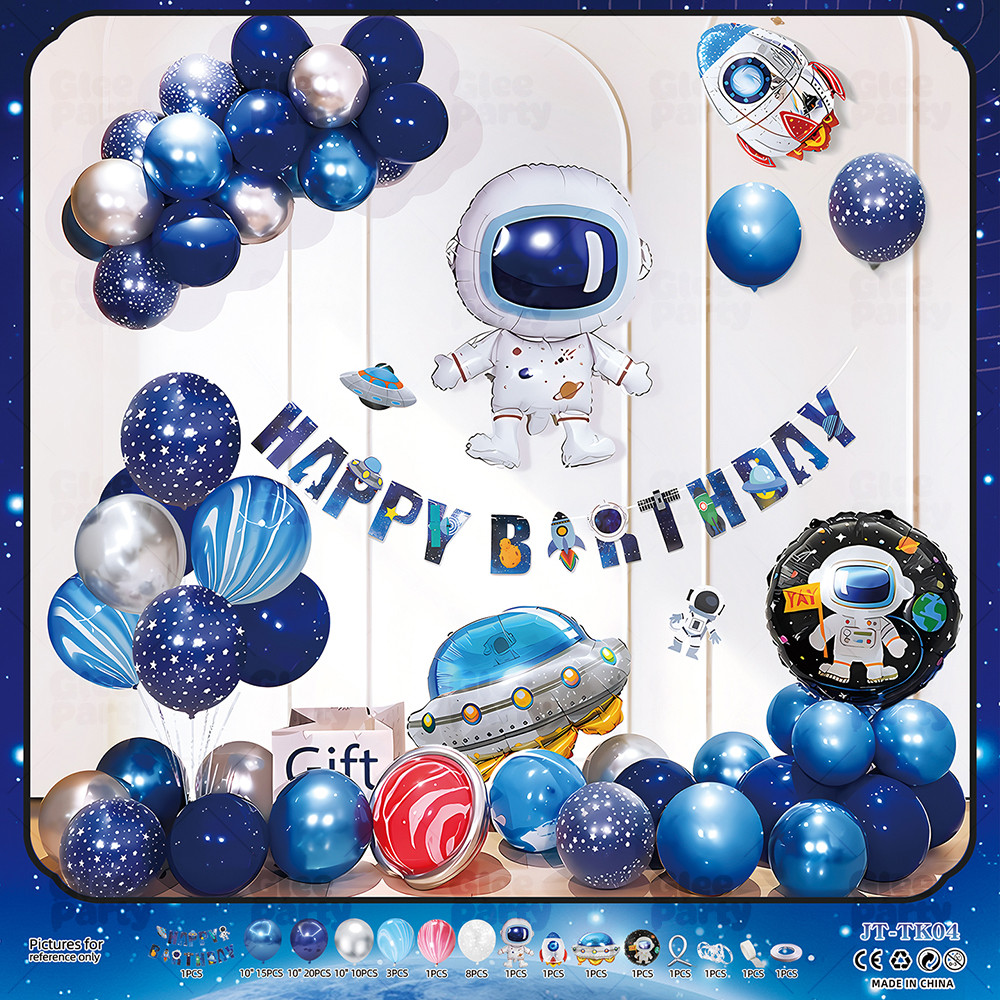
A space party collection offers plenty of visual possibilities: an astronaut, a rocket, planets, stars, a moon and a birthday message can all contribute to the theme. The challenge for a buyer is deciding which elements belong together and which should remain separate options. More motifs do not automatically create a stronger offer. A clear visual hierarchy makes the collection easier to select, quote and describe.
This guide turns that design question into a purchasing workflow for discussion with GleeParty and Yiwu Jingjie Crafts Co., Ltd. The image is a styling reference from the library, not a confirmed current kit. Check the actual product references, specifications, pack contents and availability before making a purchasing decision or preparing a customer listing.
1. Write the collection's central idea
Begin with one sentence explaining what the customer should recognize. An astronaut-led birthday display is different from a planet-led wall arrangement or a simple stars-and-moon assortment. The sentence does not need to describe every object. It should identify the main visual and the occasion, giving the buying team a practical basis for choosing supporting products.
Keep that sentence beside the reference images. When a new item is proposed, ask whether it reinforces the idea or introduces a competing direction. An attractive decoration may still belong in another collection. This is a selection decision, not a judgement about product quality, and it can help keep the initial inquiry focused.
2. Assign focal, supporting and optional roles
Choose the product or graphic that carries the main message. Then identify supporting elements that complete the theme without confusing it. A rocket may support an astronaut display, while stars provide smaller accents. Plain balloon colors may help connect the pieces. These are planning examples rather than promises about a standard pack configuration.
Mark optional elements separately. Age numerals, extra banners or additional shaped decorations may appeal to particular customers without belonging in the base offer. For a retailer, this distinction can help explain a range of choices. For an event planner, it can help separate essential products from ideas that still depend on the event brief and venue.
3. Compare illustration styles at the same time
Gather the exact references on one review sheet. Compare the character style, line detail, facial expression, graphic scale and background treatment. A cartoon astronaut and a detailed planetary image may work together, but the relationship should be intentional. Do not assume that every product described as space themed uses matching artwork.
Ask which references are actually available and identify any artwork questions. If a buyer wants a change, state it as a request for discussion rather than a confirmed customization feature. Keep the original reference visible when alternatives are proposed. This prevents a similar name from being mistaken for an identical design.
4. Establish a palette without assuming exact matches
Describe the main colors and the role of accents. Blue and silver may suggest one direction, while other combinations create a different mood. Record the actual product references behind those color names. A shared color description does not guarantee that items made from different materials or with different surface finishes will look identical.
Use sample review where coordination is important to the purchase. Note which pieces need to be compared together and what would count as an acceptable relationship. Photographs can help with initial selection, but lighting, screens and surface reflections affect appearance. Avoid promising an exact cross-material color match before the relevant products have been reviewed.
5. Read the words and numbers within the artwork
Check the wording on banners, printed circles and backdrop graphics. A birthday message or age numeral may be central to one offer and inappropriate for another. Record these elements alongside the visual motifs. A buyer seeking a general space display should not overlook occasion-specific text because the surrounding illustrations fit the theme.
Also check whether the proposed listing would imply that a numeral or additional message is included. If those items are optional, the customer description should make that clear. A collection overview can show possibilities, but the individual selling-pack description must remain tied to the confirmed items and quantities.
6. Convert the scene into a product record
Create a separate line for each requested product. Include its image reference, supplier identifier when available, quantity, required dimensions and open specification questions. Distinguish the visible theme from the item's actual construction and intended use. A rocket-shaped balloon, for example, should not acquire unconfirmed size or inflation claims merely because it appears in the scene.
Label other objects as included, optional or scene-only. Furniture, display supports and additional styling props are not part of the offer unless the written list says so. If the photographed arrangement uses more than one pack, the presentation should not imply that one pack recreates it. Ask for a packing description that supports the proposed selling format.
7. Review samples and substitutions against the concept
Sample feedback should answer defined questions: whether graphics coordinate, whether the selected sizes suit the proposed composition, and whether the pack presentation matches the planned description. Retain the reference, the question and the review note together. A general approval message is less useful when the team later needs to evaluate a proposed alternative.
If an item changes, revisit its visual role and the component record. A substitute may affect more than color: the character style, wording, dimensions or quantity may change too. Confirm the revised scope before updating purchasing documents or listing text. Keep the final approved references accessible to everyone preparing the customer-facing offer.
8. Send a brief that invites a precise response
Share the collection idea, selected references, desired quantities, destination and sales channel in one inquiry. List questions about specifications, samples, packaging and delivery arrangements explicitly. Ask for commercial details for that scope, and leave unresolved points visible until confirmed. The aim is a clear discussion, not an assumption that every styling idea is immediately available.
Read our space party collection update for the short introduction. A well-organized motif plan connects an appealing GleeParty collection with the practical information that Yiwu Jingjie Crafts Co., Ltd. needs to discuss an actual supply request.
Bring your selected references and purchasing questions to GleeParty for a focused discussion with Yiwu Jingjie Crafts Co., Ltd.. Our wholesale party supplies service is a starting point for discussing specifications, samples, packaging and delivery arrangements for your actual inquiry. Confirm product availability and commercial terms before making a purchasing commitment.