Tablecloth Size and Drop: A Measurement Guide for Party Buyers
- Share
- publisher
- GleeParty Editorial Team
- Issue Time
- Nov 6,2026
Summary
Use clear formulas and illustrative examples to compare tablecloth size, side drop, end drop and print placement before buying.
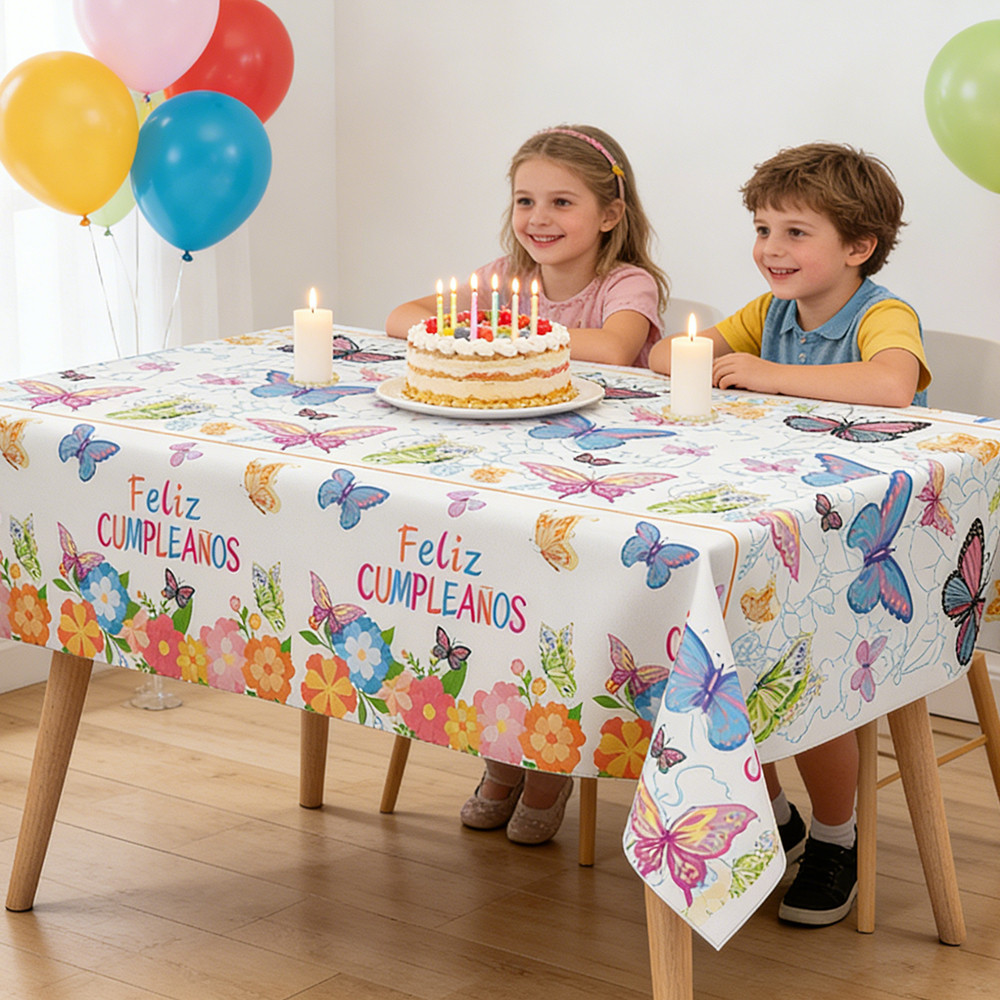
Quick answer: For a centered rectangular tablecloth, calculate end drop as (cloth length − table length) ÷ 2 and side drop as (cloth width − table width) ÷ 2. For a round cloth on a round table, use (cloth diameter − table diameter) ÷ 2. Keep shape, units and placement explicit.
By GleeParty Editorial Team · 6 November 2026 · 20261106-AM
What does tablecloth drop mean?
Drop is the part of a cloth extending beyond a tabletop edge in the intended arrangement. A buyer may want a short decorative edge, a deeper front display or another specific presentation. There is no single drop that suits every table, seating arrangement and event setup. Write the required result instead of asking for a vague “standard party size.”
This guide covers flat cloths laid over tables. Fitted or stretch covers need their own product-specific fit information. Begin with a reference from the GleeParty tablecloth range and identify the table on which the product will be evaluated.
Which measurements should you collect first?
| Field | What to record |
|---|---|
| Tabletop shape | Rectangular, round, oval or another outline |
| Tabletop dimensions | Length and width, or diameter, with units |
| Desired drop | Side and end requirements separately if different |
| Placement | Centered, offset or another stated arrangement |
| Print orientation | Which border or message should face the viewer |
| Physical review | Actual table or a clearly documented equivalent |
Measure the tabletop rather than estimating its size from a venue photograph. If the display must stop at a particular height above the floor, record the table height and the desired clearance as well. Keep that requirement separate from the cloth size name. The buyer and venue should review the actual setup, including access around the table.
How do you calculate a rectangular cloth size?
For equal drops at opposite ends, add twice the required end drop to the table length. Add twice the required side drop to the table width. If comparing an existing cloth size, reverse the calculation by subtracting the tabletop dimension and dividing by two. Calculate the two directions independently; do not assume one result applies to every edge.
| Illustrative measurement | Calculation | Result |
|---|---|---|
| Table 180 × 75 cm; cloth 240 × 135 cm | (240 − 180) ÷ 2 | 30 cm nominal end drop |
| Same table and cloth | (135 − 75) ÷ 2 | 30 cm nominal side drop |
| Round table diameter 120 cm; desired drop 25 cm | 120 + (2 × 25) | 170 cm nominal round-cloth diameter |
These numbers demonstrate the calculation only. They are not available product sizes, recommended event dimensions or GleeParty order terms. Confirm what sizes can be supplied for the selected reference and compare the resulting drop before deciding.
Why can the corners hang differently?
The formulas describe the excess along the stated length or width. They do not promise an identical hanging outline at every corner. A rectangular cloth has corner fabric beyond both adjacent edges, and its drape depends on the table shape and the material. Use an actual fit check if corner appearance or floor clearance is important.
A square or rectangular cloth on a round table also produces a different outline from a round cloth. Do not apply the round-cloth formula to its diagonal and call the result an even drop. Show the proposed arrangement in a sketch and check the places that matter to the display.
What changes if the cloth is offset?
Moving a cloth toward the front increases the front overhang while reducing the rear overhang. The two drops together still use the excess cloth in that direction, but they are no longer equal. State front and rear requirements separately and mark the orientation of any printed message. The same principle applies if one end needs a deeper drop than the other.
How should you review the sample and artwork?
Check the unfolded sample dimensions using the agreed method. Place it in the intended orientation and note side, end and corner appearance. Review where the decorative border falls relative to the edge. A print that looks centered in a flat artwork file may sit differently once part of the cloth hangs below the tabletop.
If dimensional variation affects fit, agree the requirement and checking method before ordering. Keep material, finish, packing and use information as separate specification fields. A successful size calculation does not establish liquid resistance, durability or other performance.
Prepare a precise buying enquiry
Send GleeParty, the party supply brand associated with Yiwu Jingjie Crafts Co., Ltd., your table measurements, desired drops and selected design. A simple dimension sheet and orientation sketch help connect the proposed product with the presentation your retail or event team actually needs Learn about GleeParty and Yiwu Jingjie Crafts Co., Ltd. or send a product enquiry.